How correcting the atlas can release the muscle tension behind chronic tension headaches — from the doctors at Keystone Specific Chiropractic Center in Wyomissing, PA.
Tension headaches are often driven by an upper cervical misalignment that forces the muscles at the base of the skull to overwork. Gentle, specific upper cervical chiropractic realigns the atlas and releases that chronic muscular guarding, interrupting the tension-headache cycle at its structural source instead of masking the pain with another dose of medication.
What a Tension Headache Actually Is
A tension headache is the most common form of headache — a dull, tight band of pressure that wraps across the forehead, temples, and the base of the skull, usually without the throbbing, nausea, or light sensitivity that define a migraine. It can be mild or genuinely debilitating, and for many people it shows up several times a week.
These headaches are extraordinarily common. According to the World Health Organization, episodic tension-type headache — the kind occurring on fewer than 15 days per month — is reported by more than 70% of some populations, part of the roughly 40% of people worldwide (3.1 billion in 2021) affected by headache disorders. Because the pain is so familiar, most sufferers reach for over-the-counter medication and never ask the more useful question: why do the muscles keep tightening in the first place?
How Does the Upper Cervical Spine Trigger Tension Headaches?
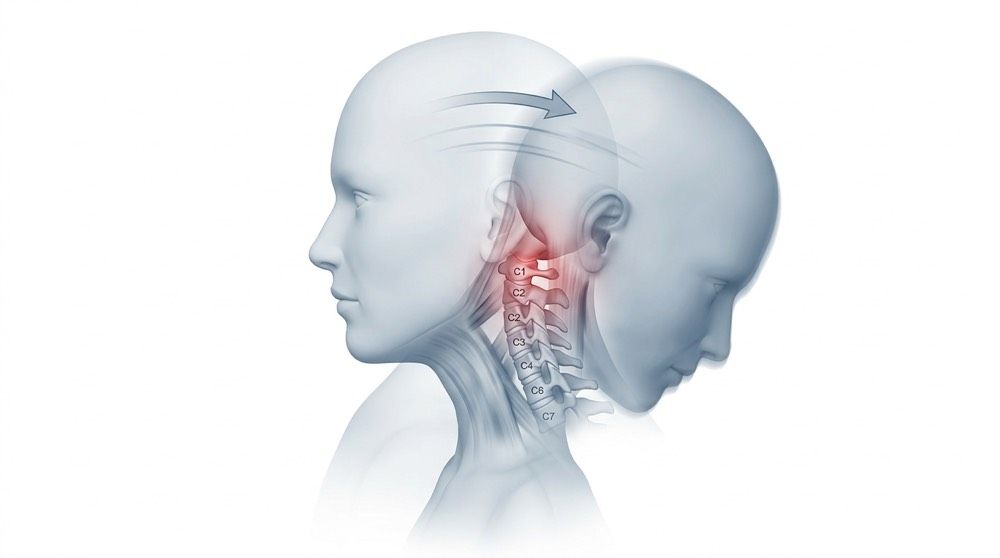
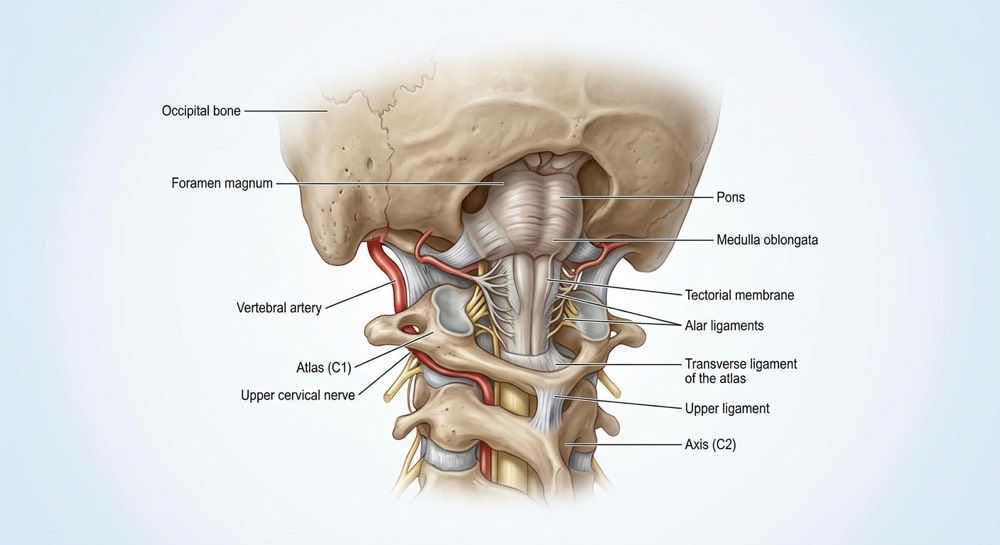
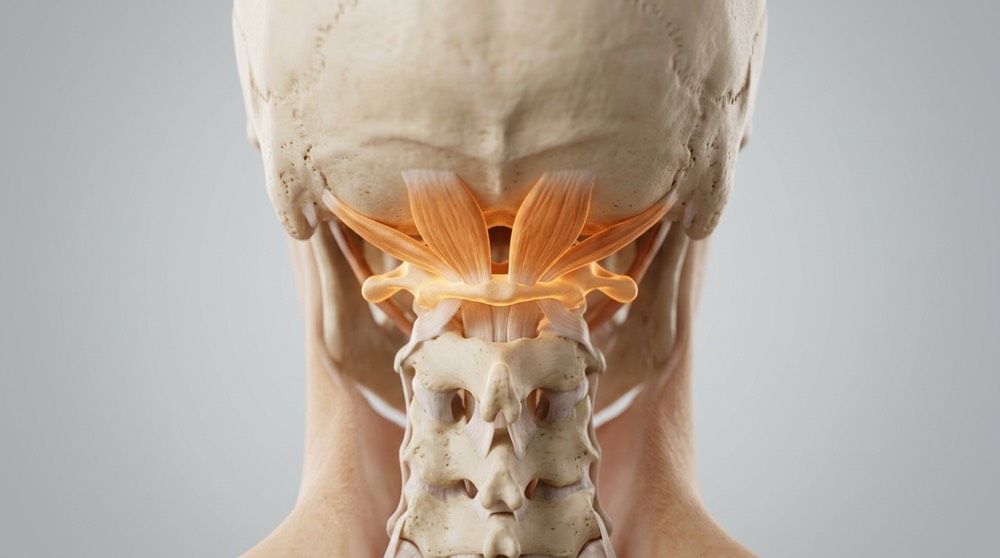
When the atlas — the top vertebra of the neck — sits out of alignment, the small suboccipital muscles at the base of the skull contract unevenly to protect the brainstem, and that sustained muscular guarding is the proximate cause of most tension-headache pain.
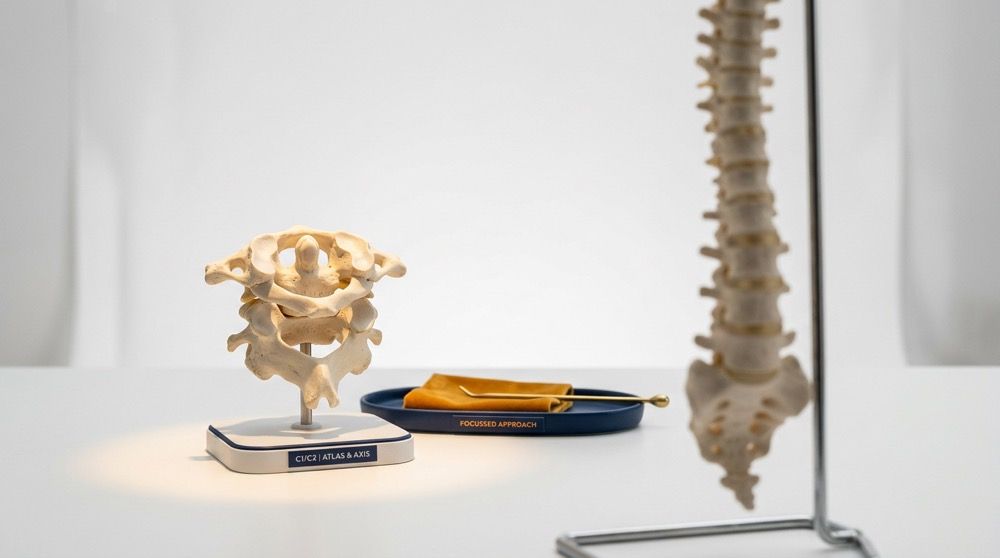
The mechanism is a simple biomechanical chain. The atlas balances the roughly ten-to-twelve-pound weight of the head. When it shifts even slightly, the body compensates by recruiting the upper-neck muscles to hold the head level. Those muscles were never designed for constant contraction, so they fatigue, shorten, and refer pain across the back of the head, behind the eyes, and through the temples. To understand why these two small vertebrae carry so much influence, see our overview of the atlas and axis. Correcting the atlas removes the reason the muscles are guarding — which is a fundamentally different strategy than stretching or medicating the muscles themselves.
The Daily Habits That Keep the Cycle Going
Everyday posture habits pile structural stress onto an already-misaligned upper neck, which is why tension headaches so often become chronic. The modern head-forward lifestyle is, in many ways, a tension-headache generator.
For many Berks County patients, the pattern is familiar: long hours at a desk, a forty-minute commute into Reading or Wyomissing, and a smartphone tilted downward through the evening. Each of these pulls the head forward of the shoulders, multiplying the load on the upper cervical spine and the suboccipital muscles. Upper cervical correction addresses the structural foundation, but patients get the best results when they also pair care with ergonomic adjustments — raising the monitor to eye level, taking movement breaks, and becoming aware of the driving and screen habits that reload the neck every day.
Can Upper Cervical Care Break the Tension-Headache Cycle for Good?
Yes — because it targets the structural cause rather than the symptom. Once the atlas is realigned and the muscles no longer have a reason to guard, the tension can finally release and, with periodic maintenance, stay released.
At Keystone Specific, our doctors do not guess at the correction. A new patient's atlas position is mapped with precise digital X-rays, and a Tytron infrared scan measures the nervous-system stress the misalignment is creating. The adjustment is then quick, gentle, and specific to that individual's measurements — no twisting or forceful cracking. You can read more about how this analytical, root-cause method works in our approach to care, and if you are new to the concept entirely, start with what upper cervical chiropractic care is. Relief is often gradual as the muscles unwind, but for people who have chased tension headaches with medication for years, addressing the structure underneath is frequently the missing piece.
Frequently Asked Questions
What makes tension headaches different from migraines?
Tension headaches usually feel like steady, band-like pressure on both sides of the head, without throbbing, nausea, or sensitivity to light and sound. Migraines are typically one-sided, pulsating, and accompanied by those additional symptoms. The two can overlap, but their pain patterns and triggers differ, which is why an accurate assessment matters before choosing a treatment path.
Can poor posture really cause tension headaches?
Posture is one of the most common contributors. When the head drifts forward of the shoulders, the muscles at the base of the skull must contract continuously to hold it up. That constant load fatigues the muscles and refers pain into the head. Correcting the underlying upper cervical alignment, then improving daily posture, addresses both the cause and the aggravating factor.
How many upper cervical visits before tension headaches improve?
It varies by person and by how long the pattern has been present. Some patients notice looser neck muscles and fewer headaches within the first few weeks, while long-standing cases take longer as the muscles gradually unwind. Your doctor re-scans at each visit to confirm the correction is holding and to track objective progress rather than relying on guesswork.
Are gentle upper cervical adjustments safe for the neck?
Upper cervical corrections are low-force and precise, guided by individual X-ray measurements rather than general manipulation. There is no aggressive twisting or cracking of the neck. Every patient is evaluated first to confirm care is appropriate, and the adjustment is tailored to their specific alignment, which makes it a gentle option for people wary of traditional high-velocity techniques.
Take the First Step Toward Fewer Headaches
If tension headaches are quietly shaping your days, they may be pointing to something structural in your upper neck. Keystone Specific Chiropractic Center in Wyomissing helps Berks County patients uncover and correct that root cause. Schedule a consultation and start measuring what is really driving your headaches.
Written by Dr. Bill Moss, DC, upper cervical chiropractor at Keystone Specific Chiropractic Center in Wyomissing, PA.
This article is for general educational purposes and is not a substitute for individualized medical advice or in-person evaluation.