A migraine trigger is what sets off an attack; a migraine cause is what makes you susceptible to being set off in the first place. Most migraine management targets triggers. Upper cervical chiropractic works on the other side of that equation, addressing a structural contributor to how reactive your nervous system is to begin with.
Why avoiding triggers only takes you so far, and what a lower baseline actually changes — from the doctors at Keystone Specific Chiropractic Center in Wyomissing, PA.
Nearly every migraine sufferer keeps a list — red wine, skipped meals, bright light, weather fronts, a bad night's sleep. The list is useful, and on its own it is still a losing strategy, because it treats the migraine as something arriving from outside rather than something your nervous system produces when its threshold is crossed.
What Is the Difference Between a Trigger and a Cause?
A trigger is a final input that tips an already-primed system over the edge. A cause is what keeps the system primed. Confusing the two is why so many people feel they are doing everything right and still getting migraines.
Consider two people who drink the same glass of red wine. One gets a migraine; the other does not. The wine is identical, so the wine cannot be the cause — it is a trigger that only matters in a nervous system already close to its limit. That is why trigger avoidance produces partial, inconsistent results: it removes individual inputs without changing how sensitive the system is to all of them. It is also why sorting out what kind of head pain you actually have matters — our comparison of cervicogenic headaches vs. migraines covers that distinction.
Why Your Trigger List Keeps Getting Longer
A growing trigger list is usually a sign that the baseline is dropping, not that you have discovered more enemies. As reactivity rises, things that never used to matter start crossing the line.
This is a pattern our doctors hear constantly from Berks County patients. Someone begins with two or three reliable triggers, and five years later the list includes a dozen foods, most weather changes, and any night under seven hours of sleep. Nothing about wine or weather changed in those five years — the threshold did. Cyclical hormonal shifts work the same way, which our post on hormonal migraines in women walks through in detail. When a list expands like that, the useful question is not "what else should I avoid" but "why is my system tipping over so easily."
How the Migraine Threshold Works
Every migraine-prone nervous system has a threshold — the point at which accumulated input produces an attack. Triggers push you toward it; your baseline determines how far you had to go.
Picture a basin filling with water. Each stressor adds some; overflow is the migraine. Trigger avoidance means adding less water on a given day, which helps but leaves the basin as full as it was. Raising the threshold means starting the day with the level lower, so the same inputs no longer overflow it. That is why two people with identical trigger exposure can have very different migraine frequency.
Where Upper Cervical Correction Fits
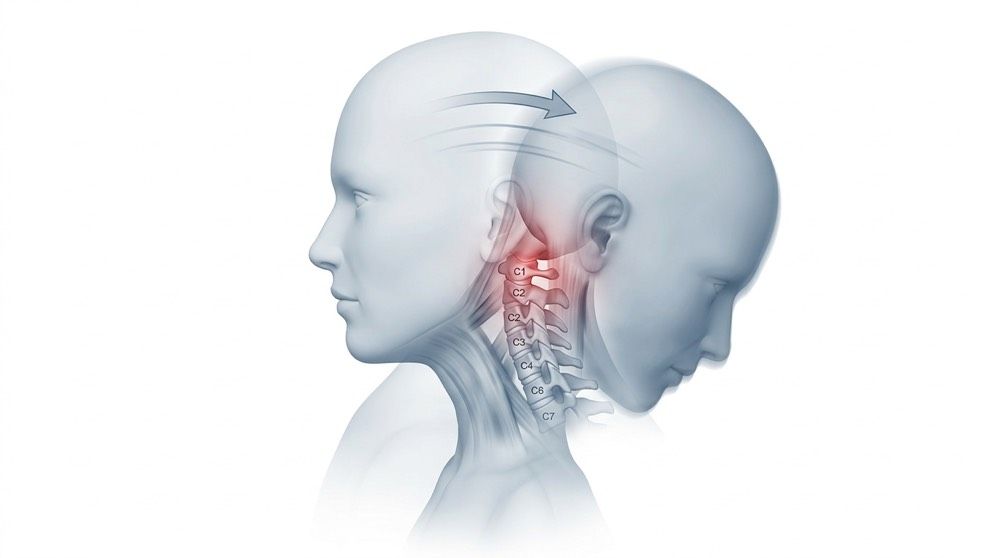
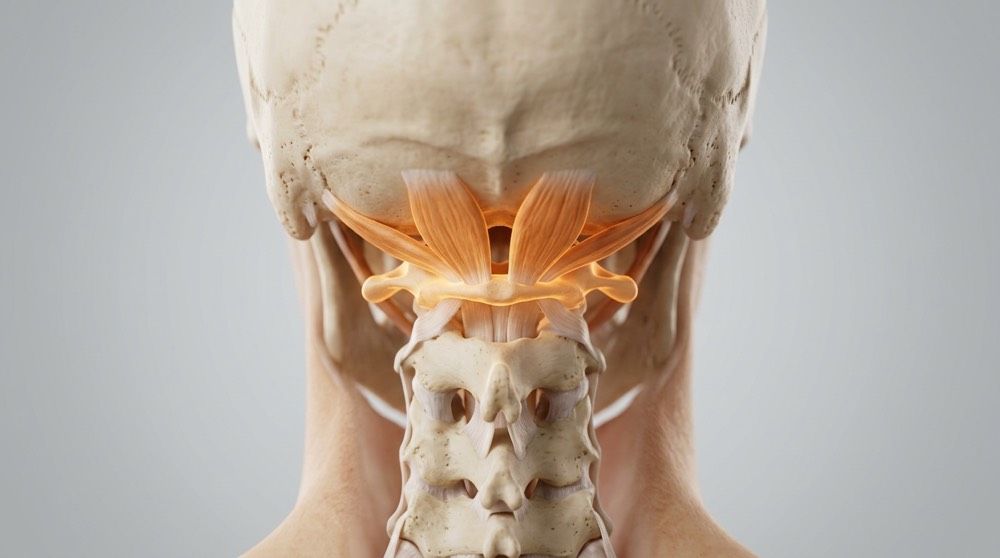
Upper cervical care aims at one identifiable contributor to that baseline: mechanical stress at the junction where the atlas surrounds the brainstem. It does not eliminate triggers, and it does not claim to.
The CDC's National Center for Health Statistics reported that in 2021, 4.3% of adults aged 18 and over had been bothered a lot by headache or migraine in the past 3 months, with the rate among women (6.2%) nearly three times that among men (2.2%) — National Health Interview Survey data published in MMWR QuickStats. MedlinePlus describes migraine as a recurring neurological condition, not an ordinary headache. Our hub on upper cervical chiropractic for migraines covers the anatomy; the short version is that the atlas sits beside structures involved in migraine pain processing, so a misalignment there is a plausible, correctable input.
Does This Mean I Can Stop Avoiding My Triggers?
No — and anyone who tells you otherwise is overselling. The realistic goal is that triggers lose some of their power, not that they become irrelevant.
Some patients do find, after a course of care, that exposures which once reliably produced a migraine no longer do. Others see a smaller change, and some see none. Keystone Specific measures rather than guesses: digital X-rays map the atlas position, a Tytron infrared scan documents nervous-system stress, and progress is tracked against those scans. That measure-first method is the basis of our approach to care. Keep your trigger awareness, keep your physician, and treat structural correction as one more way to lower the level.
Frequently Asked Questions
What is the difference between a migraine trigger and a migraine cause?
A trigger is an immediate input — a food, a weather shift, a missed meal — that sets off an attack in a susceptible person. A cause is the underlying susceptibility itself: the reason that input is capable of producing a migraine at all. Triggers vary day to day; susceptibility is the baseline underneath them.
Why does my list of migraine triggers keep growing?
Usually because your baseline reactivity is increasing, not because new triggers appeared. As the threshold drops, inputs that were previously harmless begin crossing it. A lengthening list is better read as information about the system than about the individual items, and it is a reasonable prompt to look at what is driving the baseline.
Why does the same trigger cause a migraine some days but not others?
Because your threshold moves. A trigger only produces an attack when your accumulated load is already near the tipping point, and that load changes daily with sleep, stress, hydration, and hormonal phase. The glass of wine that is harmless on a rested Tuesday can be decisive after a bad week — the wine did not change, your margin did.
Can weather changes really set off a migraine?
Many people report that barometric pressure shifts precede their attacks, and it is among the most commonly cited triggers, though individual responses vary. Weather cannot be avoided, which is precisely why it illustrates the limit of trigger management — and why lowering baseline reactivity is the only lever available for inputs you cannot control.
Stop Managing the List and Look at the Baseline
If your trigger list has grown while your migraines have not improved, the useful question is what is happening to your threshold. Contact Keystone Specific Chiropractic Center in Wyomissing — we measure the structural piece objectively, so you find out whether your upper cervical spine is part of your baseline. Prefer to talk it through first? Call us at (610) 741-6700.
Written by Dr. Bill Moss, DC, upper cervical chiropractor and founder of Keystone Specific Chiropractic Center in Wyomissing, PA.
This article is for general educational purposes and is not a substitute for individualized medical advice or in-person evaluation. Upper cervical chiropractic is not a cure for migraine. Always coordinate care with your physician and never change a prescription without consulting the doctor who prescribed it.