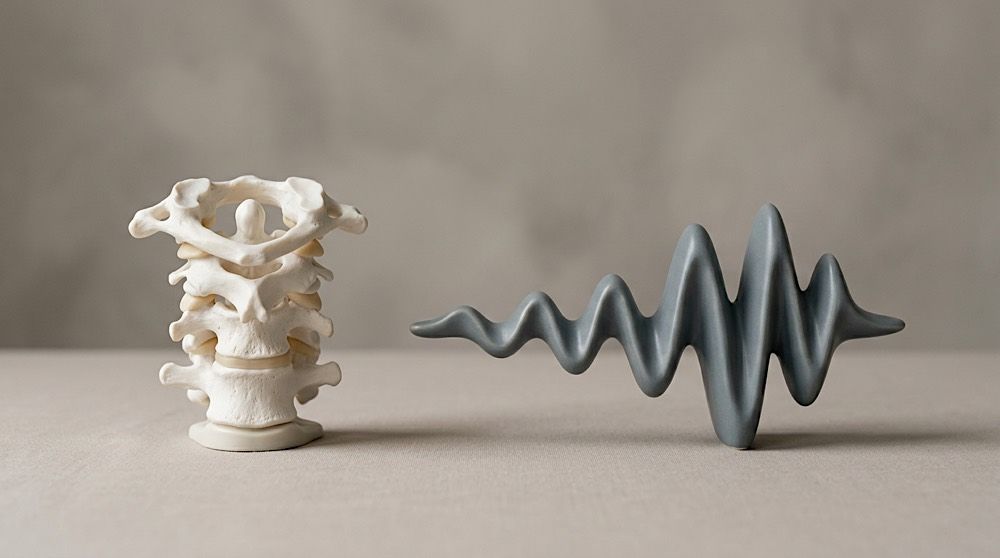
Upper cervical chiropractic care in Wyomissing, PA is a specialized, highly precise form of chiropractic that focuses on just two bones at the very top of your spine: the atlas (C1) and the axis (C2). Most people picture chiropractic as a full-spine adjustment with a lot of twisting and popping. Upper cervical care is different. Instead of working up and down the whole spine, it corrects one specific area — the junction where the head meets the neck and where the brainstem governs communication between your brain and the rest of your body.
That single difference in focus changes everything about how the care works. Rather than chasing symptoms wherever they appear, upper cervical chiropractic asks a more fundamental question: is there interference at the top of the nervous system that is driving the problem? When the answer is yes, a small, measured correction to the atlas can produce results that ripple through the entire body — which is exactly why so many patients describe it as different from any chiropractic they've had before.
A Different Starting Point: The Atlas and the Axis
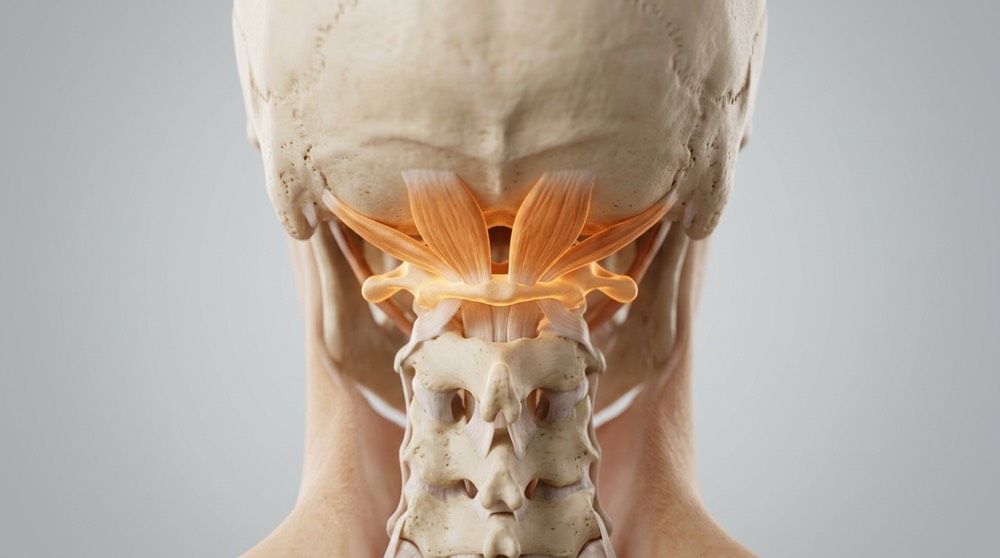
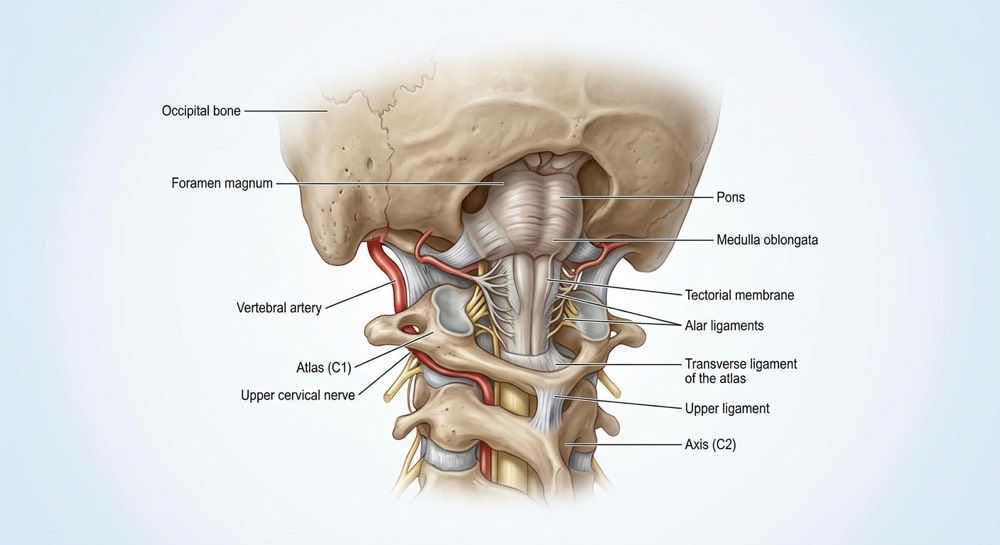
The atlas is the top vertebra of the spine. It sits directly beneath the skull and carries the full weight of the head — about 10 to 12 pounds. The axis sits just below it and allows your head to rotate. Together, these two vertebrae form the most mobile, and the most vulnerable, segment of the entire spine.
What makes this region so important isn't just mechanics — it's what passes through it. The brainstem runs through the opening in the atlas. The brainstem controls the functions you never think about: heart rate, breathing, blood pressure, digestion, and the constant flow of signals between your brain and body. Because of this anatomy, a misalignment at C1 or C2 — even one measured in fractions of a millimeter — is positioned to affect far more than your neck. To learn more about the philosophy behind this focus, see our approach and why specific care matters.
How a Tiny Misalignment Creates Whole-Body Problems
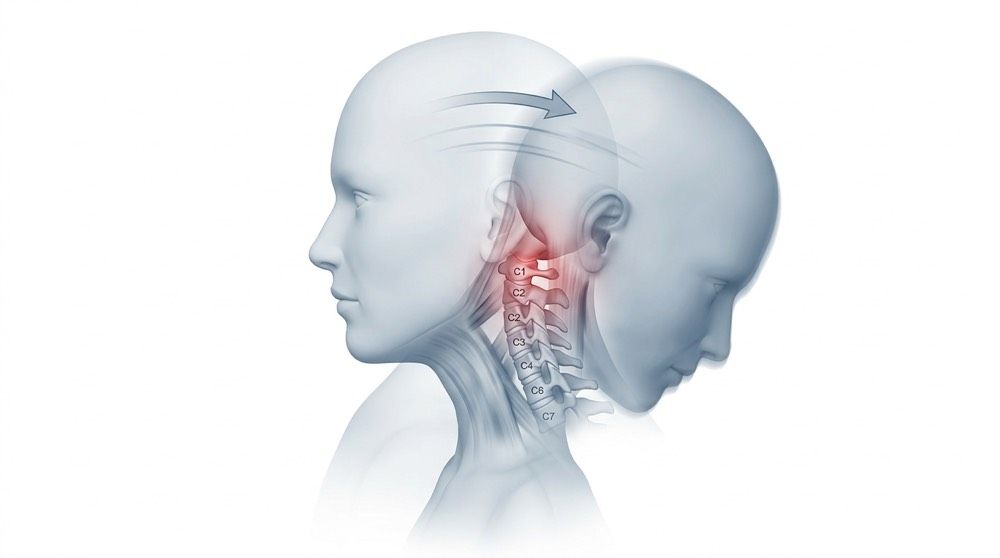
When the atlas shifts out of its proper position, the body does something remarkable: it compensates. The head tilts to stay level with the horizon, the shoulders shift, the hips rotate, and one leg can even appear shorter than the other. This is the body's best attempt to keep you upright and balanced — but it comes at a cost. The compensation creates uneven stress throughout the spine, and, more importantly, it can leave the nervous system operating under interference.
That interference is why the symptoms of an atlas misalignment look so different from one person to the next. One person develops migraines. Another develops vertigo. A third struggles with digestion, sleep, or chronic tension. The underlying problem is the same — a disturbance in nervous system communication at the top of the spine — but how it shows up depends on which pathways are most affected. When that interference drives persistent stress and tension, the connection runs deep — something we explore in anxiety and the nervous system.
Measured, Not Guessed
This is where Keystone Specific is fundamentally different from a typical adjustment. Before any correction is made, we measure. Digital motion X-rays show the exact position and angle of the atlas, which determines the precise direction of the correction. A digital infrared (Tytron) scan reads the heat patterns along the spine — asymmetries that are a reliable marker of nervous system interference. The scan is painless, takes only minutes, and gives objective data rather than relying on symptoms alone. After the adjustment, we scan again to confirm the correction held. You don't have to wonder whether it worked; you can see it in the data.
"Will It Hurt?" Why Upper Cervical Adjustments Are So Gentle
This is the most common question new patients ask, and the answer surprises almost everyone: there is no twisting, no popping, and no cracking. An upper cervical correction is gentle and specific. The force required is measured in ounces, not pounds, because the precision comes from the analysis — not from muscle.
After the adjustment, patients rest for 15 to 20 minutes in a zero-gravity chair. This rest period isn't optional downtime; it's a clinical part of the protocol. It gives the nervous system time to begin re-patterning — to start receiving clearer signals from the corrected spine. Many patients describe feeling lighter, clearer, or simply "different" before they even leave the office.
Upper Cervical vs. Traditional Chiropractic
Traditional chiropractic typically adjusts many segments of the spine across many visits, with a focus on mobility and symptom relief. Upper cervical specific chiropractic identifies one root cause — the atlas subluxation — and corrects it with a single, targeted adjustment. Because the upper cervical spine influences the entire nervous system, addressing this one area often helps with concerns that general chiropractic doesn't reach.
There's also a "less is more" principle at work. The goal is not to adjust at every visit. When the scan shows the atlas is holding and the nervous system is clear, no adjustment is made. You're only adjusted when the objective data shows it's needed — a meaningful difference from a model where an adjustment happens at every appointment regardless of findings.
The Range of Concerns People Bring to Upper Cervical Care
Because the atlas sits at the gateway of the nervous system, the concerns that respond to upper cervical care extend well beyond neck pain. Patients come to Keystone Specific for a wide range of issues — and while upper cervical care is never presented as a cure for any specific disease, the common thread is nervous system interference that a correction can help relieve. One common example is sinus headaches, where a misaligned atlas is often the overlooked driver behind the pressure and congestion.
Some of the most frequent reasons people seek care include:
• Migraines, tension headaches, and headaches that began after a head or neck injury
• Vertigo, dizziness, and balance problems
• Chronic neck, shoulder, and back pain that hasn't resolved with other treatment
• Sleep difficulties, fatigue, and the "wired but tired" feeling of a nervous system stuck in overdrive
• Stress and tension that never quite seem to settle
• Post-accident and post-concussion symptoms that lingered after standard care ended
What these have in common is not a single diagnosis but a single possibility: that interference at the top of the spine is keeping the body from regulating itself the way it's designed to. Each of these topics is explored in depth across our blog, and our care always begins the same way — by measuring first, so we know whether an atlas misalignment is actually part of your picture before we recommend anything.
That careful, evidence-first approach is the foundation of everything we do. It's also why patients who have "tried everything" so often tell us this felt different from the start.
What the Research Suggests
Upper cervical care is grounded in well-established neurology: the brainstem's role as the body's control center is not in dispute. Research has also begun to explore the downstream effects of atlas alignment directly.
A frequently cited study in the Journal of Human Hypertension reported that a precise upper cervical adjustment was associated with a meaningful reduction in blood pressure among participants with hypertension. (Upper cervical care is not a treatment for high blood pressure, and no one should change medication without their physician — but the finding illustrates how influential this region can be.) For background on the brainstem's role in regulating essential functions, the National Institute of Neurological Disorders and Stroke is a reliable, non-commercial resource.
Frequently Asked Questions
Does an upper cervical adjustment hurt?
No. There is no twisting or popping. The correction is gentle and specific, using very light force. Most patients are surprised by how little they feel during the adjustment itself.
How is upper cervical chiropractic different from regular chiropractic?
Regular chiropractic usually adjusts multiple areas of the spine at many visits. Upper cervical care focuses on correcting the atlas and axis at the top of the spine, guided by digital imaging and infrared scanning, to address nervous system interference at its source.
How many visits will I need?
It depends on your individual findings. Early in care, corrections may be needed more often as the supporting structures learn to hold the new position. As the atlas stabilizes, visits typically space out toward periodic maintenance. The aim is always the minimum necessary to keep your nervous system clear.
Take the First Step
If you've tried treatment after treatment without lasting relief, the missing piece may be at the very top of your spine. At Keystone Specific Chiropractic Center in Wyomissing, we'll measure first, explain what we find, and recommend care only if the data shows it can help. Schedule a consultation and find out whether upper cervical care is right for you.
About the Author
Dr. Bill Moss, DC, is the founder of Keystone Specific Chiropractic Center in Wyomissing, PA, and a specialist in upper cervical chiropractic. After resolving his own years of anxiety and panic through upper cervical care, he devoted his practice to the same root-cause approach — using digital imaging and infrared scanning to deliver precise, gentle corrections. He is trained in the Knee Chest and Side Posture Toggle techniques and has taught upper cervical chiropractic to practitioners internationally.