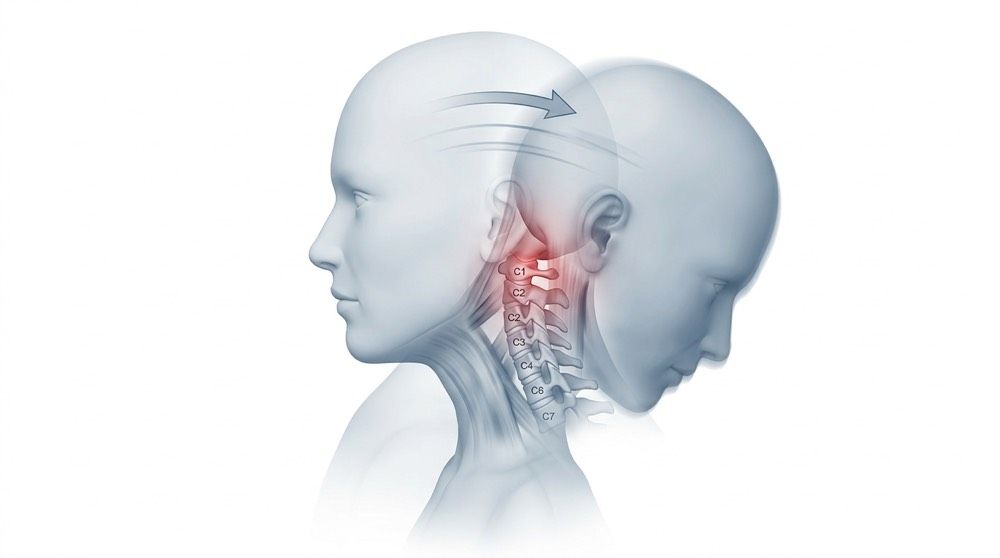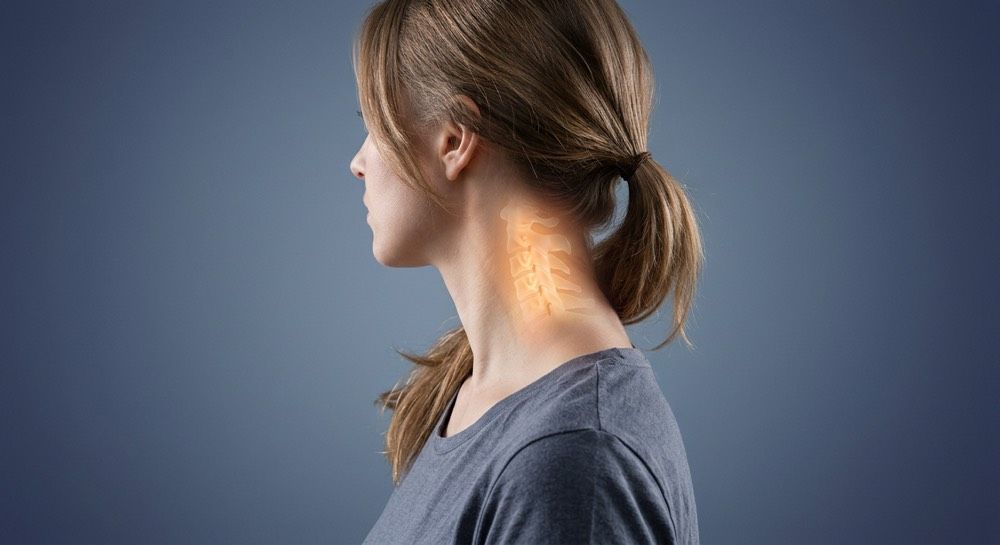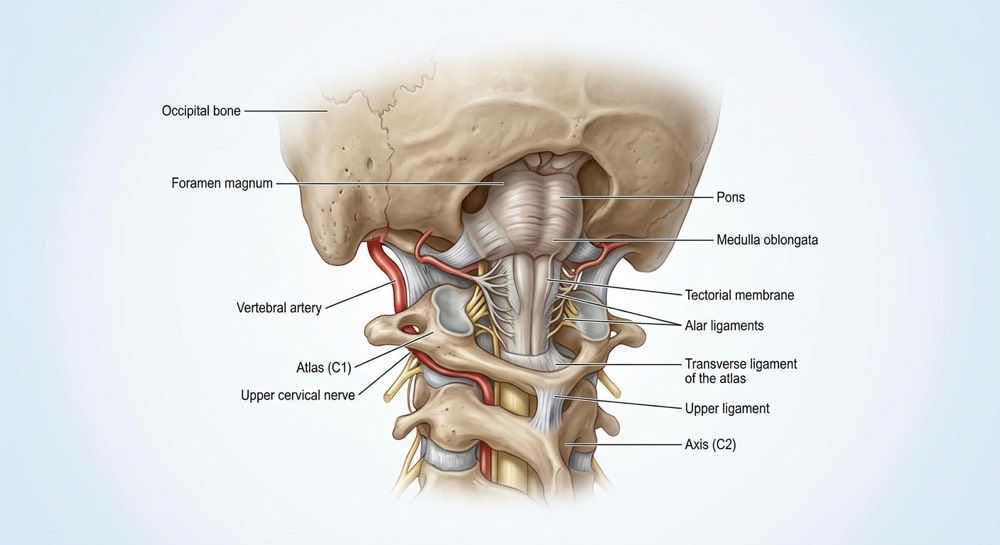
Upper cervical chiropractic addresses migraines by correcting misalignment of the atlas (C1) at the base of the skull, where the upper neck meets the brainstem. For migraine sufferers in Berks County, PA, this is a root-cause approach: instead of masking attacks with medication, it targets the mechanical irritation near the brainstem's pain-processing pathways that can help set migraines in motion.
Migraine is not "just a bad headache." It is a neurological condition, and where the upper neck meets the brainstem sits a structure central to migraine pain. This guide explains that connection, what an upper cervical correction involves, what the research does and does not show, and how to tell whether this approach is worth exploring for your migraines.
Can upper cervical chiropractic help with migraines?
For many patients, yes — by reducing a physical source of nervous-system irritation that medication cannot reach. Upper cervical care does not "cure" migraine, and no responsible provider should promise that. What it does is correct a specific structural problem — atlas misalignment — that can aggravate the neural pathways involved in migraine, giving the nervous system a better environment to function.
Migraine is remarkably common. According to the American Migraine Foundation, migraine affects about 39 million people in the United States (American Migraine Foundation, 2023), and the Global Burden of Disease research consistently ranks migraine among the leading causes of disability worldwide. With numbers that large, it is no surprise that many people look beyond medication for answers — especially when medication manages symptoms without addressing why the attacks keep happening. To understand the foundation this care is built on, start with our pillar overview,
what upper cervical chiropractic care is.
What causes migraines — and why does symptom treatment often fall short?
Migraine is a neurological event, not a structural defect of the head — but structure can influence it. Most migraine treatment focuses downstream: pain relievers, triptans, or preventive drugs that dampen attacks after the process is already underway. These tools help many people, and they have a place. What they don't do is address upstream physical contributors that may keep the nervous system primed to react.
That is the gap upper cervical care aims to fill. Rather than asking "how do we stop this attack," it asks "why is this nervous system so reactive in the first place, and is there a mechanical piece we can correct?" This root-cause mindset is the heart of
why we practice specific chiropractic — restoring normal function rather than chasing symptoms one flare at a time.
The brainstem connection: the trigeminocervical nucleus
The key link between the upper neck and migraine is a relay station called the trigeminocervical nucleus, where nerves from the head and the upper cervical spine converge. This convergence is why pain signals from the upper neck can be perceived as head pain — the brain literally shares wiring between the two regions.
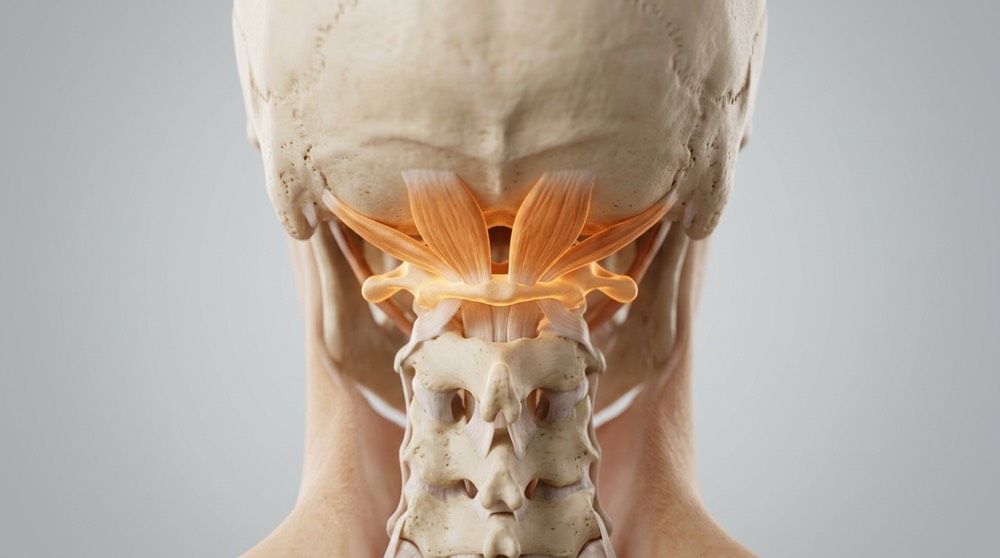
The atlas (C1) and axis (C2) sit directly at this junction, surrounding the lower brainstem and the top of the spinal cord. When the atlas is misaligned, it can create mechanical stress in exactly the area where these pain pathways come together. In a system already sensitive to triggers, that added irritation may lower the threshold at which a migraine fires. Correcting the alignment is intended to remove that mechanical contributor — not to override the brain's chemistry, but to stop feeding it an unnecessary source of stress.
How atlas misalignment can influence migraine pathways
A misaligned atlas can affect migraines through irritation, altered blood and cerebrospinal-fluid flow, and heightened muscle tension in the suboccipital region. None of these acts alone as "the cause" of migraine, but together they can shift a sensitive nervous system toward more frequent or more intense attacks. The upper cervical spine has an unusually rich supply of nerves and an outsized role in postural control, which is why small misalignments here carry disproportionate influence.
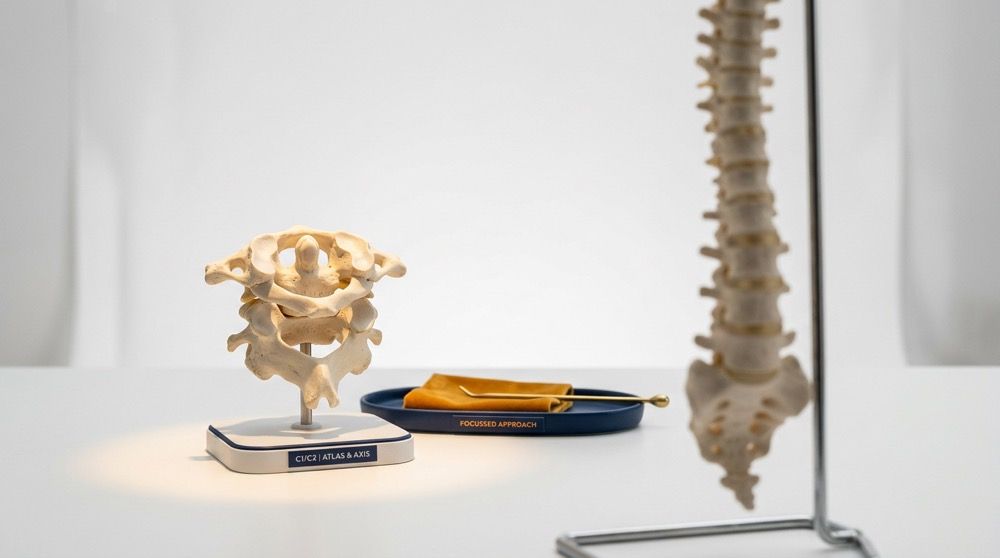
This is also why precision matters so much. The two small vertebrae involved are described in detail in our post on
the atlas and axis. Because they sit at the most neurologically dense crossroads in the spine, a correction there has to be exact — calculated from imaging, not estimated by feel.
What does an upper cervical correction for migraines involve?
It begins with analysis, not adjustment. Before any correction, Dr. Bill Moss uses digital postural X-rays to map the precise geometry of the atlas misalignment and infrared thermography to document nervous-system interference. The correction itself is then delivered along a specific vector calculated from those images — a light, controlled contact with no twisting, no high-velocity thrust, and no "cracking."
This measured, evidence-informed method is central to
our approach to care. For migraine patients in particular, the gentleness is meaningful: a sensitized nervous system does not respond well to force. If you want to see how one of these gentle corrections is actually performed on the table, our explainer on the
Knee Chest upper cervical technique walks through the mechanics step by step. After a correction, patients rest so the nervous system can begin re-patterning, and a follow-up scan confirms the change held.
Migraines, sinus pressure, and other headache types
Not every "migraine" is a migraine, and sorting out the type matters because the upper neck contributes differently to each. Sinus-attributed head pain, tension-type headaches, and cervicogenic headaches can all overlap with — or be mistaken for — migraine, and several share a common thread through the upper cervical spine. Getting the picture right is part of what a thorough assessment provides.
Sinus-labeled headaches are a frequent example of mistaken identity. Many people treat "sinus headaches" for years when the true driver sits higher in the neck; our post on
sinus headaches and upper cervical care unpacks that overlap. Understanding which headache pattern you actually have is the first step toward addressing it at the source rather than chasing the wrong target.
What does the research say about upper cervical care and migraine?
The evidence is promising but still developing, which is the honest way to describe it. Small studies and case reports have documented reductions in migraine frequency and intensity following upper cervical care, and the anatomical rationale — the shared wiring of the trigeminocervical nucleus — is well established in mainstream neurology (Cleveland Clinic, 2024). What the literature does not yet offer is large, definitive clinical trials, so upper cervical care should be understood as a reasonable, low-force option to explore — not a guaranteed outcome.
At Keystone Specific, that is exactly how it is framed. Dr. Moss discusses realistic expectations up front, uses objective scans to track whether your nervous system is actually responding, and adjusts the plan based on data rather than hope. You can read patient experiences on our
success stories page, keeping in mind that individual results vary and no two nervous systems respond identically.
How does upper cervical care fit with the triggers you already track?
It works alongside trigger management by addressing the underlying reactivity that makes triggers matter in the first place. Most migraine sufferers keep a mental list of triggers — stress, poor sleep, weather shifts, certain foods, hormonal changes, screen time. Avoiding them helps, but triggers only fire an attack when the nervous system is already primed to overreact. Upper cervical care targets that priming from a structural angle.
Think of it this way: if the atlas is misaligned and irritating the brainstem region, your threshold for "too much" is lower, so ordinary triggers tip you over more easily. Removing that mechanical stress can raise the threshold, so the same weather change or stressful week may no longer be enough to set off an attack. This is why upper cervical care is best viewed as complementary to, not a replacement for, the trigger awareness and healthy routines you have already built. The two work in the same direction — a calmer, more resilient nervous system with fewer things able to push it into a migraine.
What migraine patients in Berks County have experienced
Some patients who arrive after years of medication report meaningful, lasting change — fewer attacks, less intensity, and less reliance on rescue drugs. A common story at the practice is the person who has "tried everything," cycled through specialists, and never had anyone examine the top of their neck. When imaging reveals a clear atlas misalignment and a correction restores alignment, the nervous system sometimes settles in ways medication never delivered.
These outcomes are not universal, and Keystone Specific does not present them as such. But for migraine sufferers across Wyomissing, Reading, Shillington, and the wider Berks County area who feel out of options, an upper cervical evaluation offers something different: an objective look at a structural piece other approaches routinely overlook.
Is upper cervical care right for your migraines?
It is worth considering if your migraines are frequent, medication only partly helps, and no one has evaluated your upper cervical spine — especially if you have a history of head or neck trauma. Whiplash, concussions, falls, and even difficult births can misalign the atlas, and that history often traces back further than patients expect. An evaluation is non-invasive and simply answers whether a correctable misalignment is present.
Upper cervical care also pairs well with the care you already have. It is not a demand to abandon your neurologist or your medication; it is an added, root-cause layer. The starting point is always the same: analysis first, so any recommendation is grounded in your own images and scan rather than a generic protocol.
Frequently asked questions
Is upper cervical chiropractic safe for migraine sufferers?
Upper cervical corrections are low-force and specific — no twisting or forceful thrusts — which makes them well suited to sensitive, migraine-prone nervous systems. Care begins only after digital X-rays and an infrared scan confirm a misalignment is present. As with any care, discuss your full health history with Dr. Moss so the approach is tailored to your situation.
How many visits before I might notice a difference?
It varies widely from person to person, and no honest provider can give a fixed number. Some patients notice changes within the first few weeks, while others need longer for the nervous system to re-pattern and stabilize. Objective infrared scans are used to track whether your body is actually responding, so progress is measured rather than assumed.
Can I keep taking my migraine medication during care?
Yes. Upper cervical chiropractic is not a replacement for your prescribed medication or your physician's guidance — it is a complementary, root-cause approach. Never change or stop a prescription without consulting the doctor who prescribed it. Many patients continue their medical care while adding upper cervical care as an additional layer.
What's the difference between a migraine and a cervicogenic headache?
A migraine is a neurological condition with its own distinct features, while a cervicogenic headache originates from a structural problem in the neck that refers pain into the head. They can feel similar and even overlap, which is why an accurate assessment matters. Sorting out the type guides how the upper cervical spine is addressed.
Do I need a referral to be evaluated?
No referral is needed to schedule an upper cervical evaluation at Keystone Specific Chiropractic Center. You can book directly. The evaluation is a non-invasive assessment — consultation, digital X-rays, and an infrared scan — designed to determine whether an atlas misalignment is contributing to your migraines before any correction is recommended.
Take the next step toward migraine relief
If migraines are running your life and medication only goes so far, a root-cause evaluation may be the missing piece. Contact Keystone Specific Chiropractic Center in Wyomissing to find out whether an atlas misalignment is contributing to your migraines — and what a gentle, precise correction could mean for your Berks County life.
By Dr. Bill Moss, DC — Founder, Keystone Specific Chiropractic Center, Wyomissing, PA. This article is for informational purposes and is not medical advice; consult a qualified provider about your individual condition.